Communication Management System
Future-proof system architecture with proven technology
The basis is a unified packet-switched infrastructure – the IP network – into which communication channels, media, devices, workstations, and additional systems such as sensors are integrated.
With the NGS3600, a central control unit, the so-called softswitch, manages the connection between individual clients and forms the core of the entire system.
All clients send their connection requests to this softswitch, which connects them to the desired partner. Once a connection is established, the softswitch is no longer involved – meaning that in case of a lost connection to the softswitch or a failure of the system core, ongoing calls can continue uninterrupted.
Media Gateways
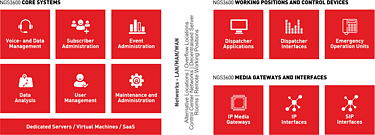
At the outer boundaries of the network, so-called media gateways or session border controllers are positioned. These establish connections to external communication networks such as ISDN, All-IP connections, analog telephone lines, digital radio, and more.
The media gateways convert specific signaling and protocols into the SIP protocol. For security reasons, these gateways can be configured redundantly with automatic failover and are deployed at the point of line termination.
The software-based media gateways are an integral part of the overall system and are designed to be secure and highly redundant. This includes components such as the session border controller, AML-, emergency call detection and eCall services, as well as the digital radio connector.
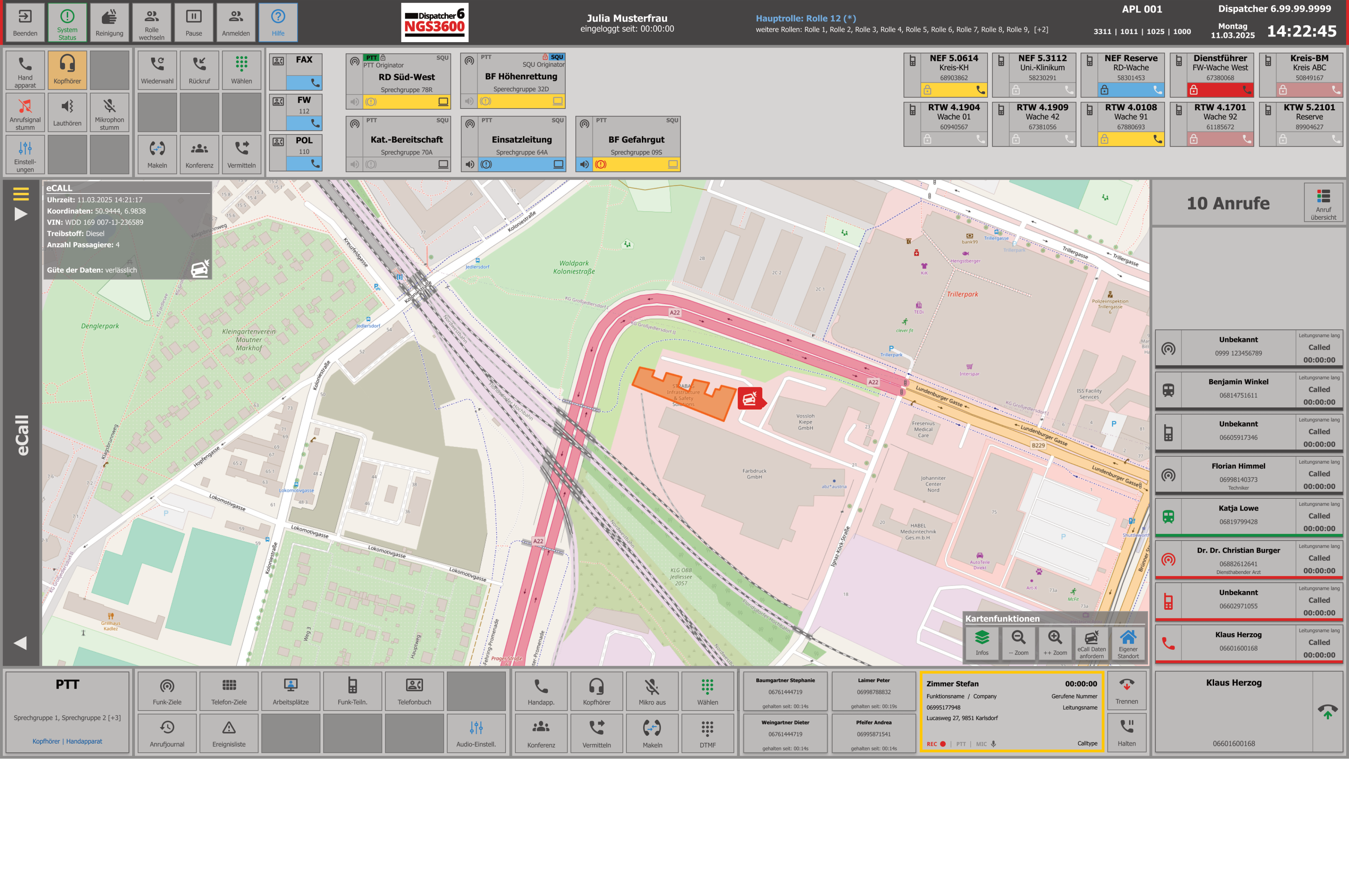
SIP/IP-based peripheral devices – such as public address systems, intercoms, video cameras, or building management systems – are directly integrated into the network. For analog or proprietary systems, media gateways are available to ensure compatibility. This allows, for example, digital radio FRTs to be integrated for emergency operations, forming part of the system with a unified and ergonomic user interface.
Powerful, location-independent and flexible fields of application
The high-performance NGS3600 forms the foundation for a wide range of operational and technical capabilities, meeting the demands of redundant, decentralized, or centralized control center topologies.-
Networking Capabilities
Its networking capabilities allow for flexible positioning of individual system components. The NGS3600 Core Systems can be operated redundantly, geo-redundantly, for example within data centers on dedicated or virtual server platforms.
As a hybrid system, the architecture enables seamless migration from on-premises use to the cloud. The system evolves in line with operational and organizational requirements – always with a strong focus on security-relevant framework conditions. -
Media Gateways & IP Interfaces
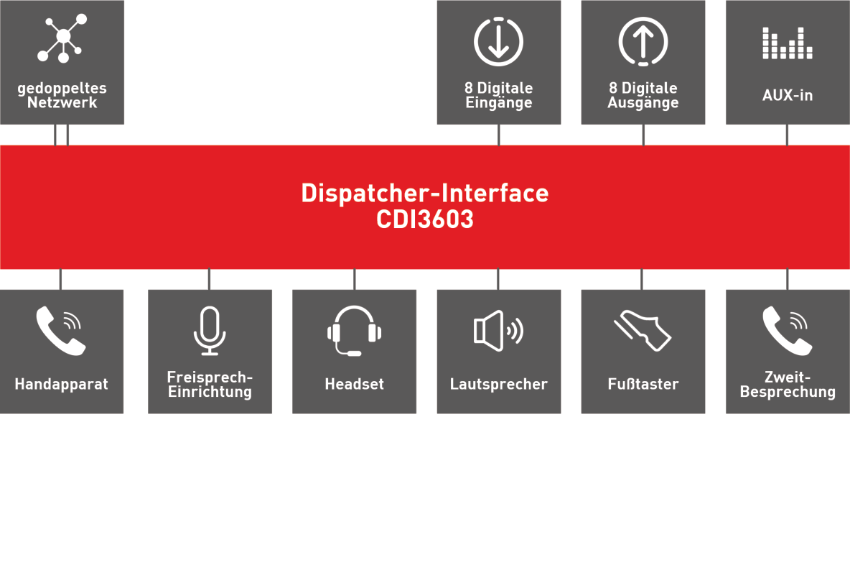
The Media Gateways and IP interfaces connect public or organization-internal telephone lines, various digital radio systems and devices, as well as media, public address, and building management systems. They are deployed as part of the overall system architecture at the point of termination within the network.
-
Workstations
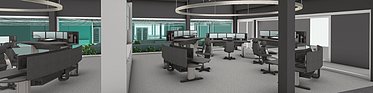
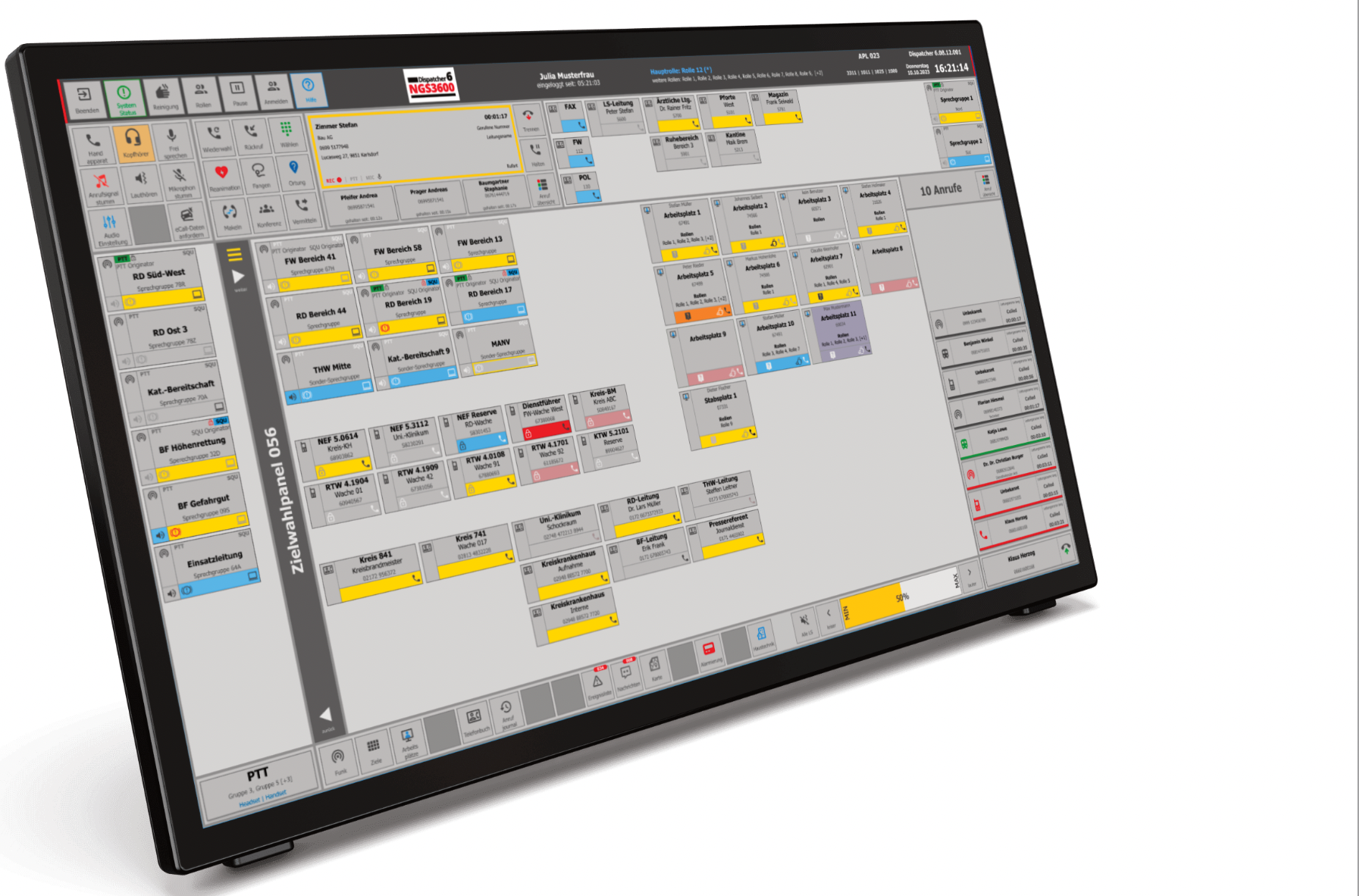
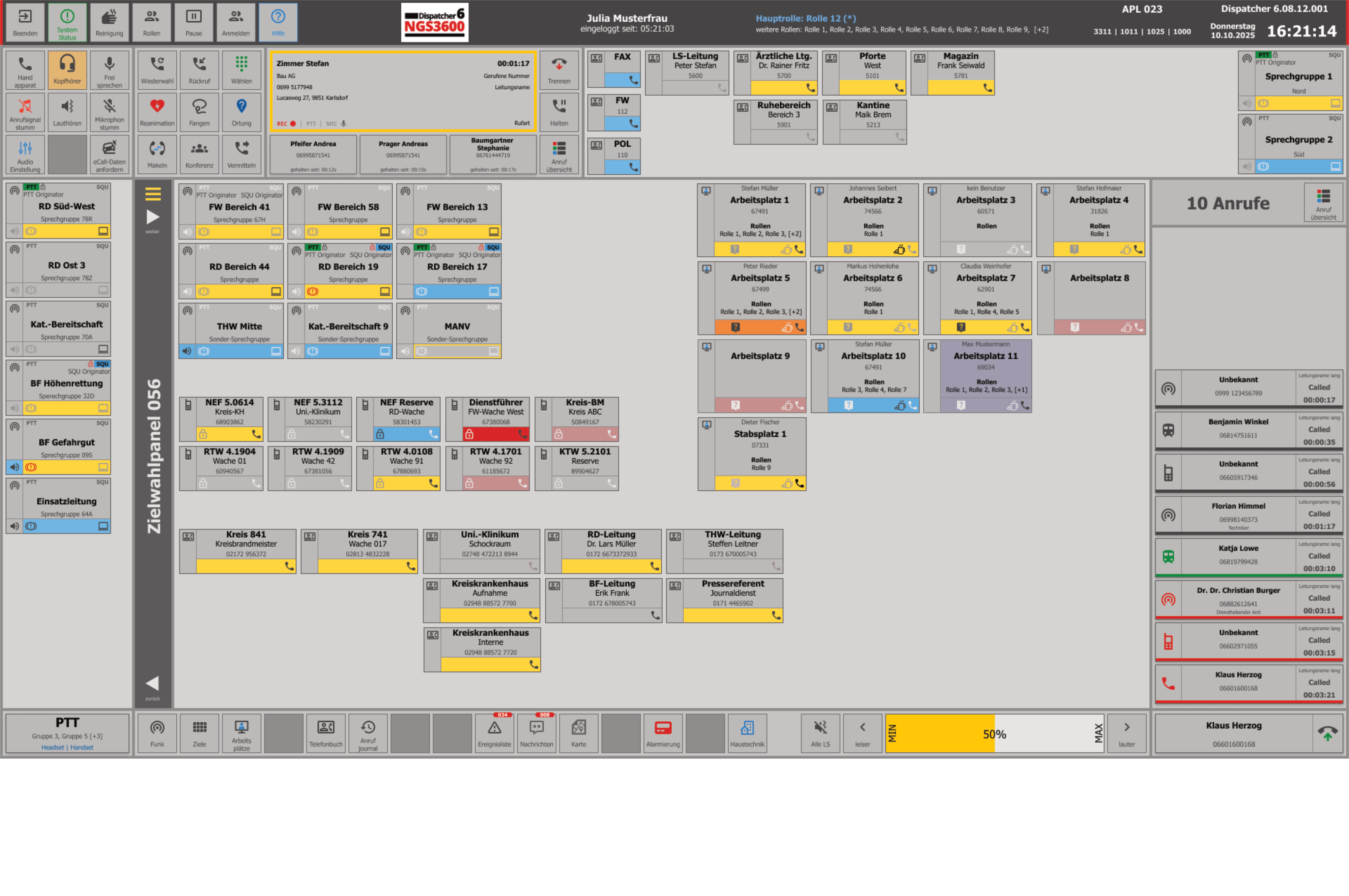
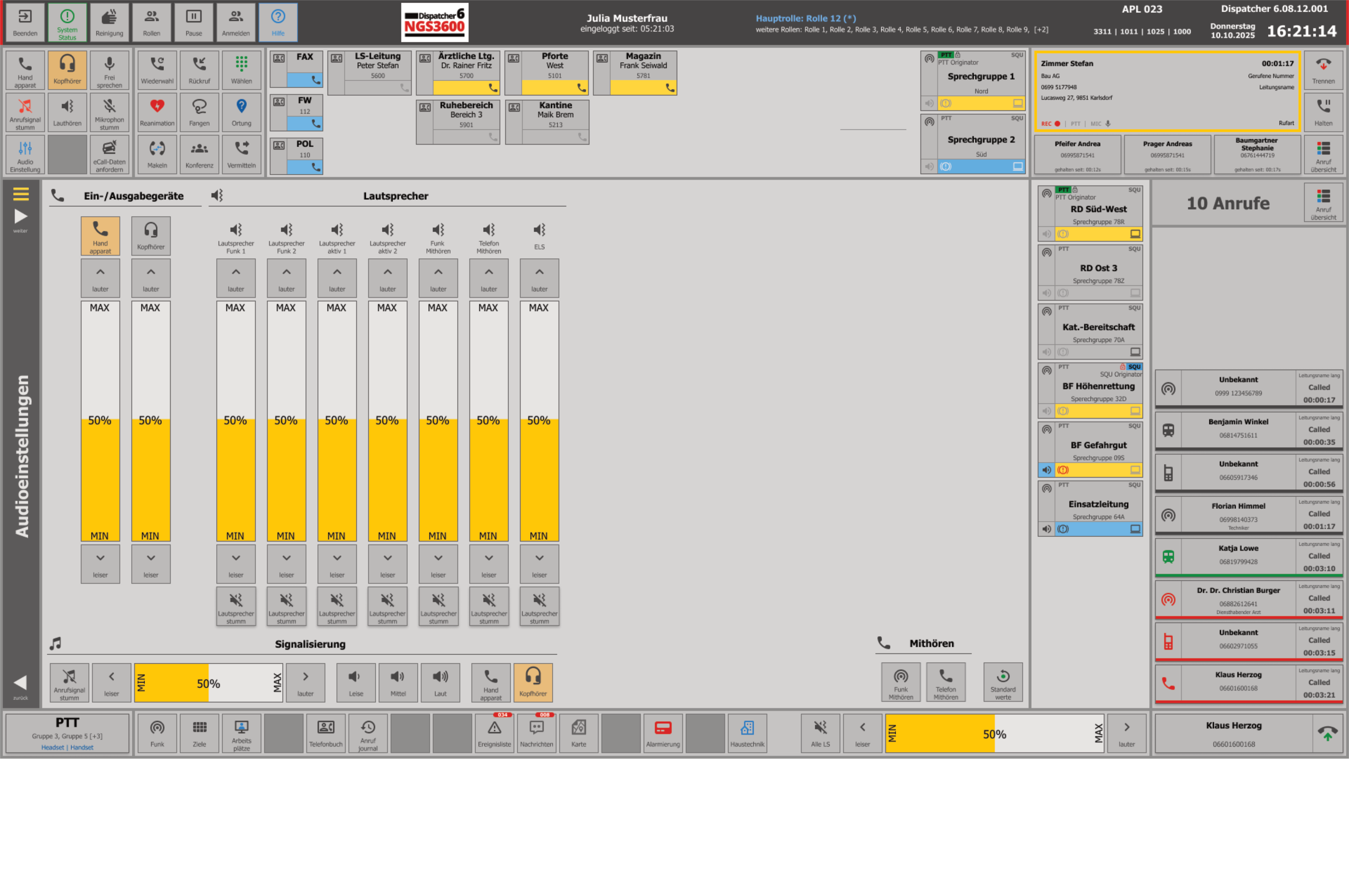
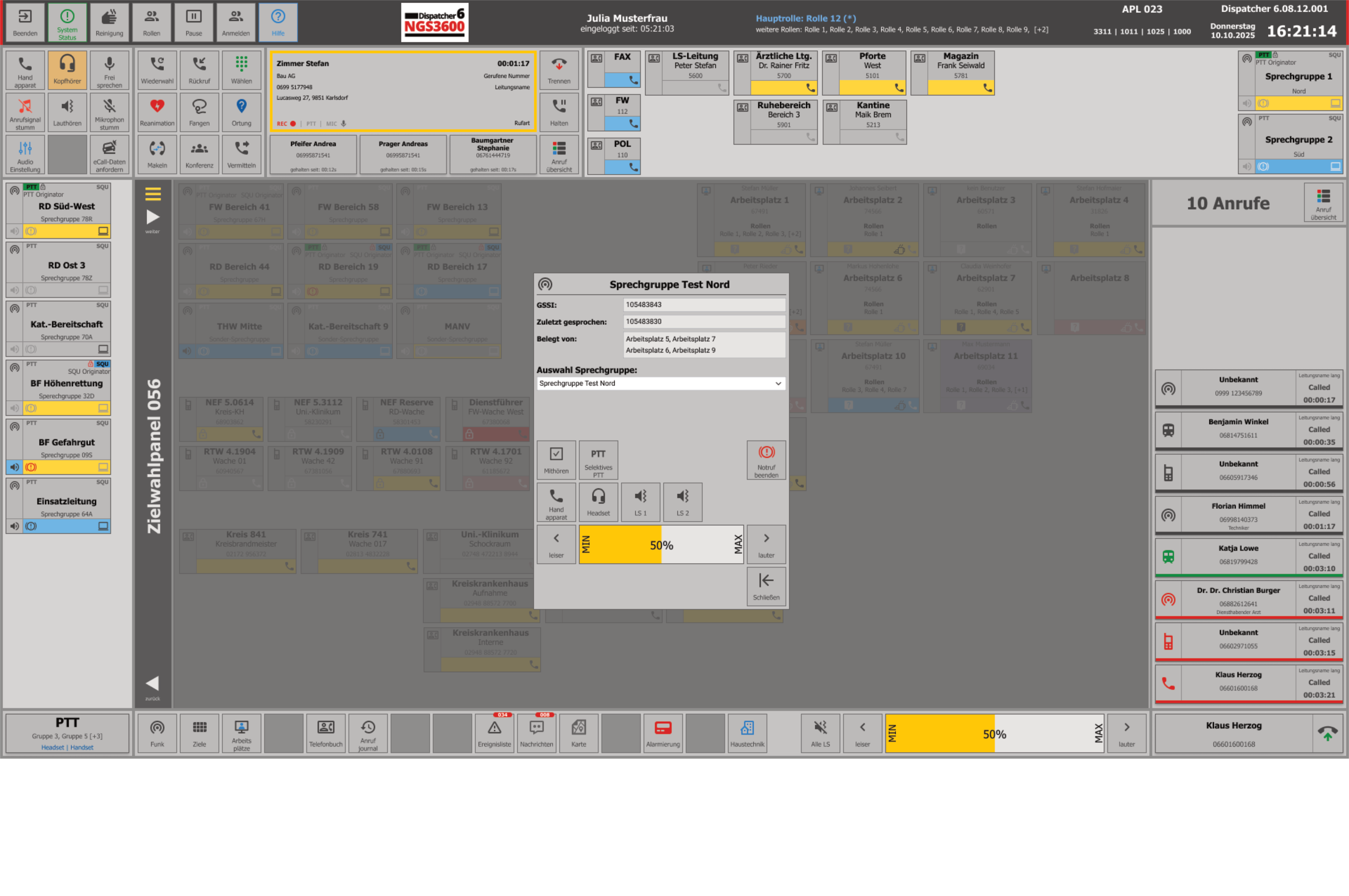
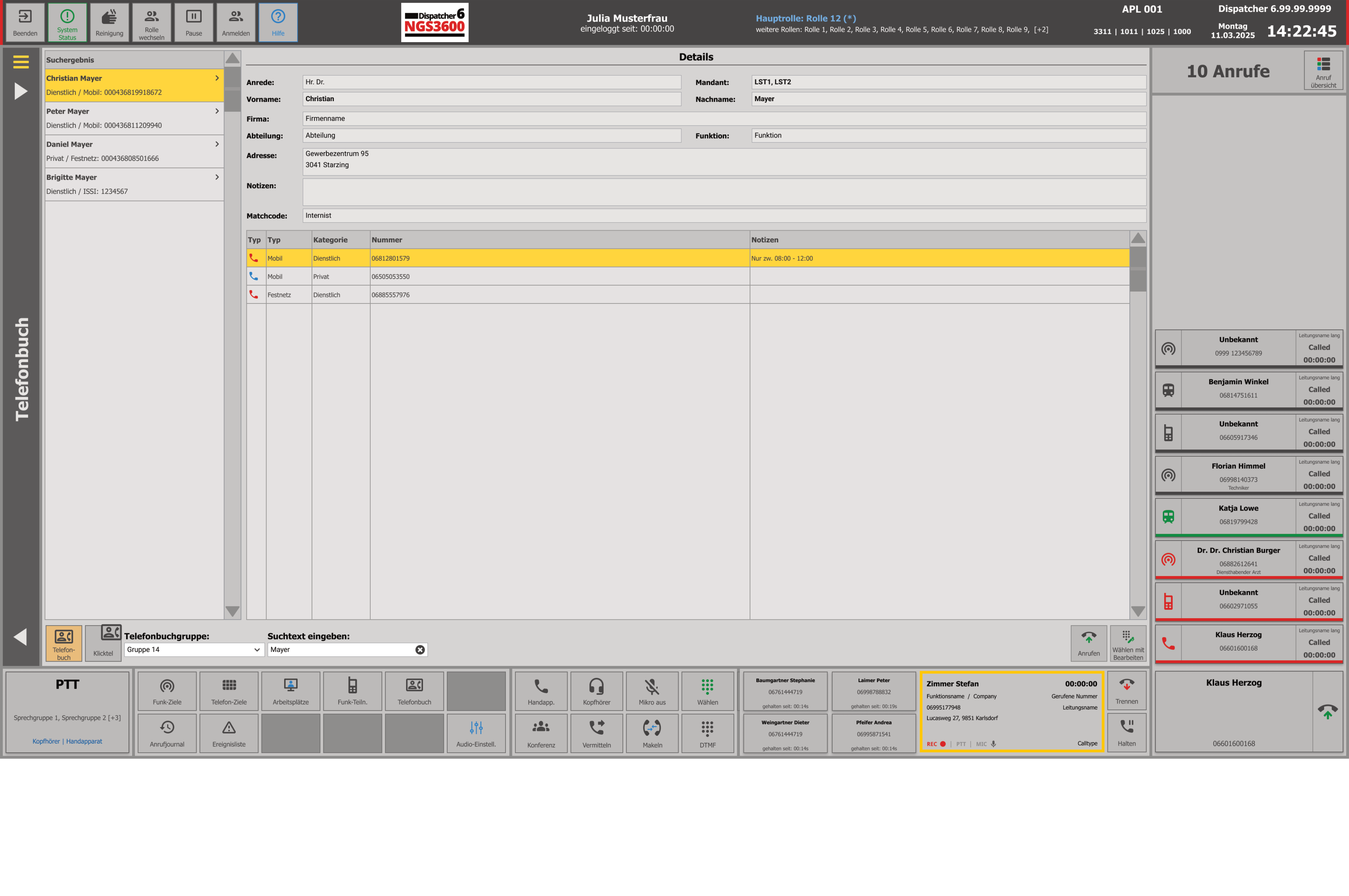
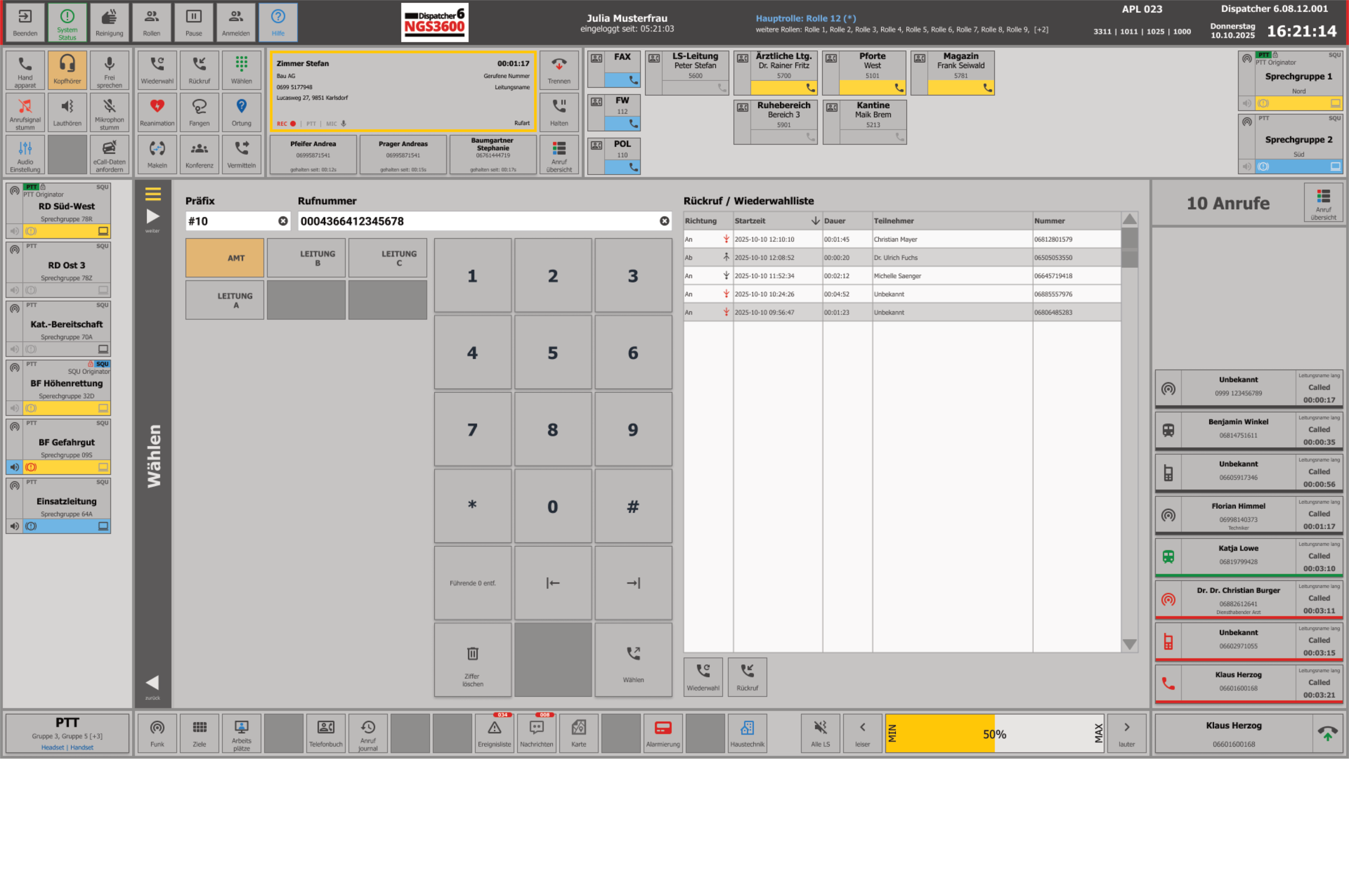
The workstations are available in various equipment levels and can be operated in traditional control center environments, command and situation centers, backup locations or completely mobile on COTS hardware. As a web client, the dispatcher application offers maximum flexibility in deployment.
-
Multi-Client Capability & Free Seating
Multi-client-capability, in combination with advanced features such as role- and rights management and flexible ACD mechanisms, enables maximum freedom of use – even across different organizations and locations. Free seating is a key function for ensuring operational flexibility in control center environments.
Individual Architectures
The system’s capabilities allow for individual architectures – for example the shared use of All-IP connections, TETRA interfaces, or redundancy levels. Workstations can be designed for internal or cross-organizational use, with complete freedom in their placement.
In high-load operation, certain services, call types or groups and functions can be dynamically redirected to specific workstations or control centers. This so-called support or overflow mode ensures balanced utilization during normal operations and significantly increases capacity when needed. During major incidents, mass casualty events, or planned operations, the NGS3600 serves as a powerful support platform.
In evacuation scenarios, workstations at alternative or temporary locations can be activated and integrated into operational workflows, ensuring continuity even during building evacuations.
Redundancy mode enables continued operation using technology from another location or organization, depending on the type of failure – including continued use of the standard workstations.
Migration mode enables uninterrupted control center operations during the setup of new sites, implementation of new transmission technologies and interfaces, or planned centralization of control centers. Locations with different technical setups can initially be networked and later consolidated both technically and operationally.